Studio, 1-Bed or 2-Bed: What Rents Best in Thailand
In short
No unit size rents best everywhere. Studios suit short stays and single tenants, one-bedrooms suit couples staying for the winter and remote workers, and two-bedrooms suit families and groups. The right choice depends on the area, the tenant you are aiming at, what the building allows and who will buy the unit from you one day.
"Which size rents best?" is one of the first questions buyers ask when they plan to let a condo in Thailand. It sounds like it should have a single answer. It does not, because the size of a unit mostly decides one thing: who your tenant is. Get that right and the rest follows; get it wrong and a well-located flat can sit empty in the season it was bought for.
We deliberately quote no rents, no occupancy and no yields here. They vary by building and street far more than by unit size, and an average would mislead you. Where we give a figure for a specific unit, it is an agency estimate with a source and a date, and our guide to rental yield and agency estimates explains what that label means.
Start with the tenant, not the floor plan
Thailand's resort cities attract a few distinct groups of renters, and each looks for something different:
- Holidaymakers: a week or two, often a couple or a single traveller, booking online and comparing photos, location and price.
- Winter residents: people escaping a cold season, often retirees or couples, staying for months and caring about quiet, a proper kitchen and a walk to the beach.
- Remote workers: staying for a few months, needing a desk, a stable connection and somewhere to work that is not the bed.
- Families: holidays with children or relatives, needing a second bedroom, a pool and space to spread out.
Before you look at sizes, decide which of these you are aiming at, and check that the building suits them. Whether short stays are allowed at all depends on the law and on the building's own rules. Our guide to renting out and managing your property covers that, and it is worth reading before you choose a unit, not after.
Studios: short stays and single tenants
A studio puts the bed, the sitting area and a kitchenette in one room, with only the bathroom behind a door. It is the lowest entry price in most projects, which is why it is popular with first-time investors. It suits a traveller or a couple on a short trip who spend their days out, and a single person renting for a longer spell on a budget.
The limits are just as clear. A studio is hard to live in for months as a couple, there is nowhere to work while the other person sleeps, and families pass it by. In buildings full of studios, you also compete with many identical units, so location, view and the quality of the photos do much of the work. Projects with studio layouts are on our Pattaya studio condos page.
One-bedroom: winter stays and remote workers
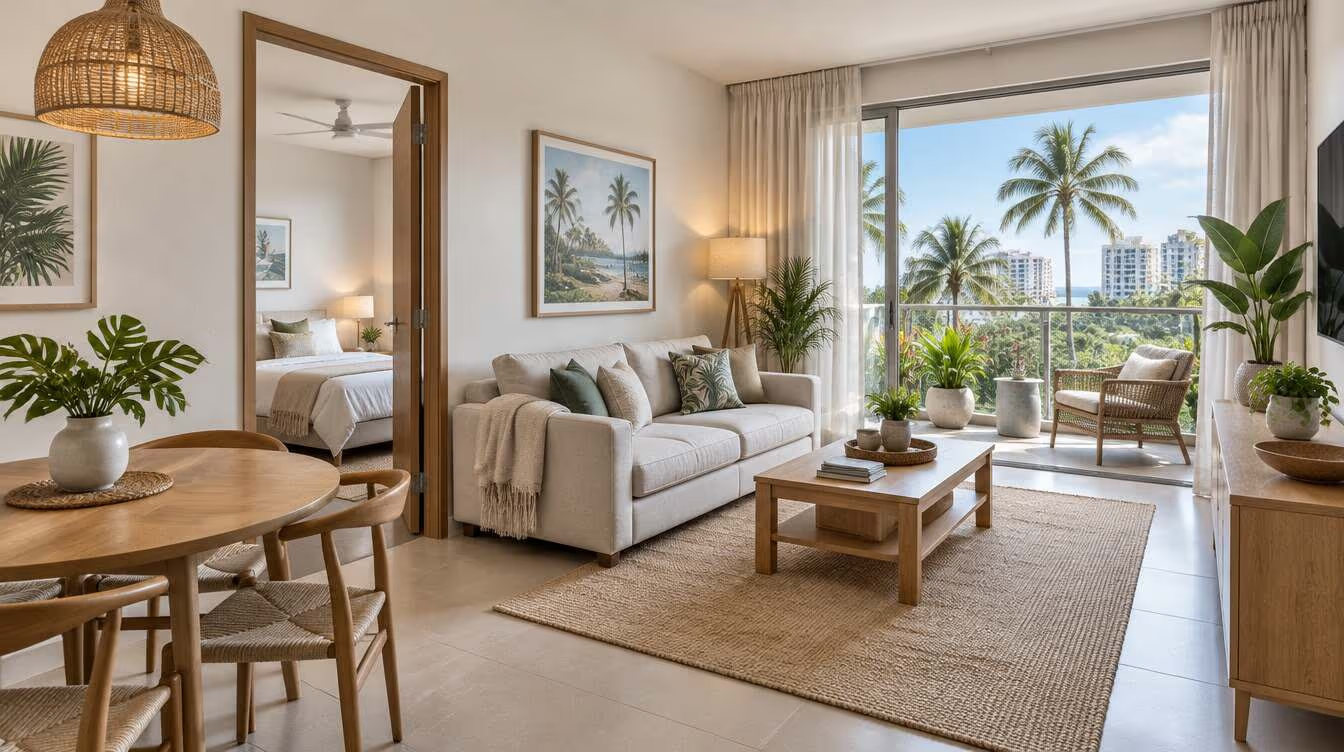
A one-bedroom adds a door between the bedroom and the living area, and that door changes who will rent it. One person can work or watch television while the other sleeps; a guest can sit in the living room without walking through the bedroom. For a winter resident or a remote worker staying for months, that separation is often the deciding factor.
A one-bedroom also works for holiday lets, so it gives you two kinds of tenant to fall back on when one is quiet. That flexibility is the main reason many buyers treat it as the safe middle choice. See one-bedroom apartments in Phuket for projects with this layout on the island.
Two-bedroom: families and shared trips
A two-bedroom is aimed at families, friends travelling together and longer-stay tenants who want a guest room or a home office. These tenants tend to book further ahead, stay longer, and pay attention to the building as much as the unit: the pool, a children's area, parking, a supermarket nearby.
The catch is that the pool of such tenants is narrower and more seasonal, tied to school holidays and the high season. In a building aimed at couples and single travellers, a two-bedroom can be the odd one out. It tends to work best in buildings and areas that families already choose.
Running costs and furniture grow with the unit
Size changes your costs as well as your tenants. The common fee in a Thai condominium is charged per square metre, so a larger unit pays more every month, including the months it stands empty. Electricity for air conditioning, cleaning between guests and wear on furniture all grow with the number of rooms. Where we have it, a project page shows the building's common fee rate per square metre, so you can compare sizes on the same basis before you decide.
Furnishing matters too. Holiday and seasonal tenants generally expect a unit they can move into with a suitcase: beds, linen, a kitchen with the basics, a working desk for remote workers, and air conditioning in every room. Each extra bedroom means another bed, another air conditioner and more to replace over time. Check whether the developer's furniture package covers this, or whether you will be furnishing on top of the price.
Think about the buyer who comes after you
Every rental unit is eventually sold, and the next buyer may be an investor or someone who wants to live there. A unit that suits only one narrow group of tenants usually suits a narrow group of buyers as well. Ask yourself who would buy this layout from you in a few years: another investor looking at a crowded field of identical studios, or a couple looking for a one-bedroom to winter in, or a family looking for space. Layout, view and how the building has been maintained will matter more then than the size alone. Our guide to reselling property in Thailand covers the practical side of selling.
A quick way to decide
- Name your main tenant first, and a second one for the quiet months.
- Check that the building allows the kind of letting you plan, and suits that tenant.
- Look at what else is for rent in the same building, and in which sizes.
- Add up running and furnishing costs for each size, including empty months.
- Picture the person who will buy the unit from you, and check the layout works for them too.
Tell a ROMA ThaiProperty manager who you want to rent to and where, and they will suggest layouts and buildings from our catalog that fit, with current prices and availability confirmed with the developer.
Questions and answers
Is a studio or a one-bedroom better for rental in Thailand?
A studio suits short stays and single tenants and costs less to buy and run. A one-bedroom suits couples staying for months and remote workers, and can also be let for holidays, which gives you more than one type of tenant. Which is better depends on the building and the tenant you are aiming at.
Do two-bedroom condos rent well?
They can, in areas and buildings that families and groups already choose. Demand for them is narrower and more seasonal, and running and furnishing costs are higher, so a two-bedroom makes most sense where its tenants are already looking.
What rental income can I expect from each unit size?
We do not publish general figures, because rents depend on the building, the street and the season more than on size. For a specific unit, a manager can give an agency estimate with its source and date.
Should a rental condo be furnished?
For holiday and seasonal lets, tenants generally expect to move in with just a suitcase. Check what the developer's furniture package includes, and budget for what it does not.
Related property collections
- One-Bedroom Condos for Sale in Pattaya
- Two-Bedroom Condos for Sale in Pattaya
- Studio Apartments for Sale in Phuket
- Two-Bedroom Apartments and Villas for Sale in Phuket
Want to talk it through with a manager? Message us on WhatsApp or leave a request.

Who will answer you
Roman Solovyev · Founder, CEO
- Speaks Russian and English
- Mon-Fri 09:00–22:00 Thailand time
We’ll send a shortlist of projects and their payment plans to your WhatsApp.