Common Mistakes Foreign Buyers Make in Thailand
In short
Most costly mistakes foreign buyers make in Thailand are not exotic legal traps but ordinary decisions taken too quickly: buying from a render, trusting a guaranteed return, forgetting running costs and currency swings, and not checking the developer. Each one is avoidable with a few questions asked in writing before you reserve.
Buying a condo in Thailand from abroad is easier than many people expect. Developers are used to foreign buyers, contracts come in English, and much of the process can be handled remotely. That ease is part of the problem. When buying feels simple, it is tempting to skip the checks you would never skip at home.
The mistakes below come up again and again, whatever country the buyer comes from. None of them requires specialist knowledge to avoid; they require time, a few direct questions and an independent lawyer. This article is general information, not legal, tax or investment advice.
Mistakes in choosing the unit
Buying the render, not the building
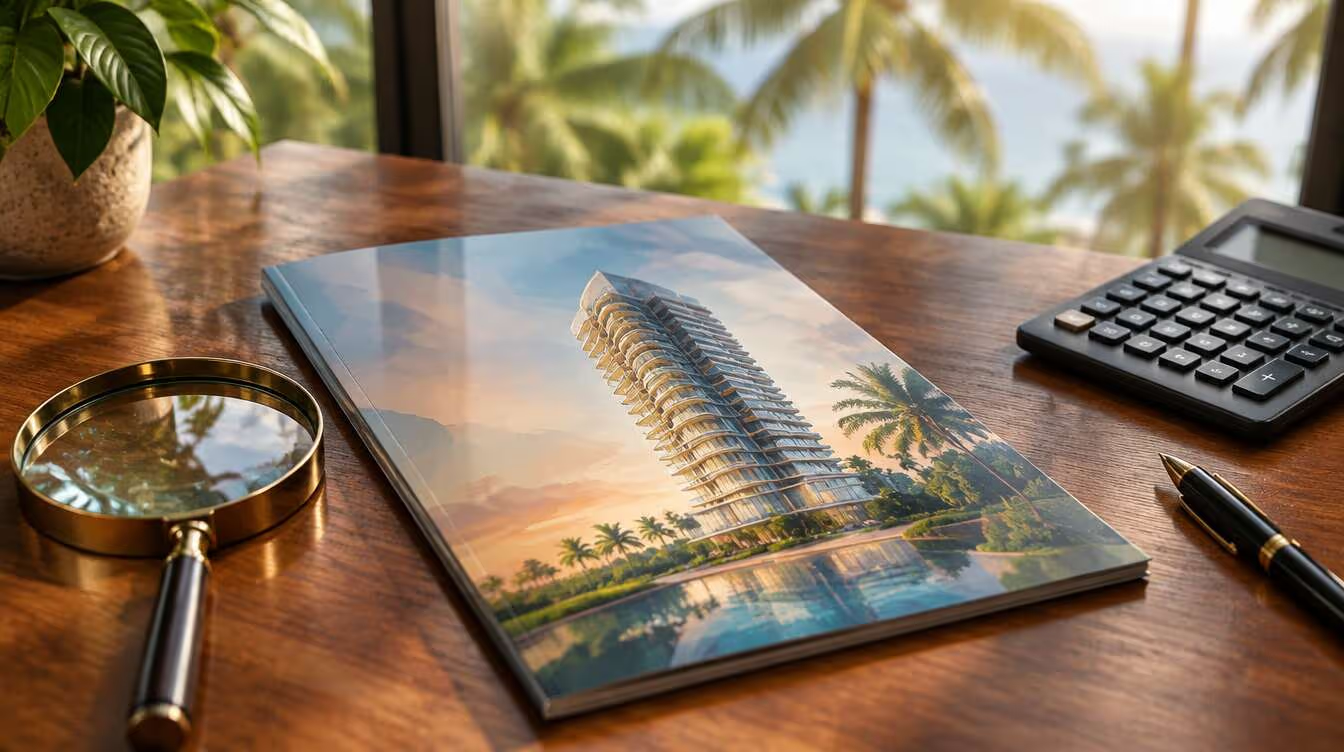
Off-plan projects are sold with images: a sunlit lobby, a rooftop pool, a balcony with an empty beach below. Those images show an intention, not a finished building. Materials, views and even layouts can change before handover, and what binds the developer is the contract and its specification, not the brochure.
How to avoid it: ask for the specification that is attached to the contract, check what it says about finishes, furniture and common areas, and visit a building the same developer has already completed. Seeing how an older project of theirs has aged tells you more than any render.
Paying for a view over an empty plot
A sea view from a high floor is often the reason a unit costs more. But if the land between you and the sea is empty today, it may not stay empty. Thai resort towns keep growing, and a new tower next door can turn a sea view into a view of someone else's balcony.
How to avoid it: look at what stands, or could stand, in front of your windows. Ask the developer and your lawyer what is known about neighbouring plots, and treat a view that depends on empty land as a bonus, not as something you are paying for.
Not thinking about who buys it from you
Every unit is sold one day. A layout that suits only a narrow group of tenants, a building full of identical units or a project with poor upkeep can all make that sale slower. Foreign buyers also depend on room in the building's foreign quota. Our guide to reselling property in Thailand explains what to think about before you buy, not after.
Mistakes with money
Believing in a guaranteed rental return
A guaranteed return sounds like certainty. In practice it is a clause in a contract, and it is worth exactly what the company behind it can pay. Ask who guarantees it, from what money, for how long, what happens to your personal use of the unit, and what happens when the guarantee ends. Sometimes the guarantee is simply built into a higher price.
Treat any income figure as an estimate, never as a promise. Our guide to rental yield and agency estimates lists the questions worth asking and explains how gross and net figures differ.
Forgetting the running costs
The purchase price is a one-off; the costs of owning stay with you every month, including the months the unit stands empty. Condominiums charge a common fee per square metre, and there is also electricity, water, internet, insurance, an annual land and building tax, air-conditioner servicing and, if you let the unit, management and cleaning. A villa adds a pool, a garden and security that nobody shares with you.
How to avoid it: add up the running costs before you compare units, not after. Our guide to ongoing ownership costs lists them one by one, and a project page shows the common fee rate where we have it.
Counting everything in one currency
Prices in Thailand are in baht, while your savings, salary or mortgage at home are probably in another currency. Over an instalment plan that runs for years, the exchange rate can move in either direction, and so can the value of rent you convert back home. The unit costs the same in baht; what it costs you does not.
How to avoid it: plan your budget with some margin for currency movements, and decide in advance when and how you will convert money for each instalment rather than leaving it to the day the invoice arrives.
Sending money in whatever way is easiest
How the purchase money reaches Thailand matters for registering a condo in a foreigner's name, and not every route produces the paperwork the Land Office expects. This is not something to improvise. Agree the route, the currency and the payment purpose with an independent Thai lawyer before the first payment, and keep every confirmation. Our guide to sending money to Thailand explains the background.
Mistakes in the process
Rushing because of the last unit
"Only one unit left at this price", "the offer ends today", "we need the deposit now to hold it". Pressure like this is a sales technique, and sometimes a warning sign. A good unit in a sound project will not disappear because you spent a few days reading the contract with your lawyer.
How to avoid it: never pay a reservation deposit before you have seen the draft contract and know the terms on which the deposit is refundable. If the seller will not wait for that, it tells you something.
Not checking the developer
When you buy off-plan, you pay the developer long before the unit is registered in your name, so the company matters as much as the building. Look at what it has completed and how those buildings are run today, and have your lawyer review the land title, permits and contract. Our article on checking a developer before buying off-plan walks through it step by step. Be wary, too, of the suggestion to use the developer's own lawyer to save time: your lawyer should act for you.
A short checklist before you reserve
- You have seen the contract specification, not only the brochure.
- You know what could be built in front of your windows.
- Any rental figure is labelled as an estimate, with its source and date.
- You have added up running costs for a full year, including empty months.
- Your budget allows for currency movements over the payment plan.
- An independent lawyer has agreed the money transfer route with you.
- The developer's past projects and documents have been checked.
- You know the conditions on which the deposit is refundable.
How ROMA ThaiProperty can help
A ROMA ThaiProperty manager can confirm current prices and availability with the developer, send you the documents a project provides, and help you compare buildings on running costs and resale, not only on the brochure. Legal and tax questions belong with an independent lawyer and your tax adviser; we will tell you which questions to bring to them.
Questions and answers
What is the most common mistake when buying property in Thailand?
Deciding too fast: reserving a unit from a render and a sales pitch before seeing the contract, checking the developer or adding up running costs. Most other mistakes follow from that one.
Can I trust a guaranteed rental return from a developer?
Only as far as the contract and the company behind it allow. Ask who guarantees it, from what money and what happens if they cannot pay, and have your lawyer read the clause before you rely on it.
How should I send money to Thailand to buy a condo?
Check in advance with an independent Thai lawyer, because the route of the money matters for registering a condo in a foreigner's name. Our guide to sending money to Thailand explains the background.
Do I need my own lawyer if the developer offers one?
Yes. The developer's lawyer acts for the developer. An independent Thai lawyer who acts for you should review the contract, the land documents and the payment route.
Related property collections
- New Developments in Pattaya: Presale and Under Construction
- Phuket New Developments: Off-Plan Condos and Villas
- Ready Condos in Pattaya: Completed Buildings
- Ready Condos for Sale in Phuket
Want to talk it through with a manager? Message us on WhatsApp or leave a request.

Who will answer you
Roman Solovyev · Founder, CEO
- Speaks Russian and English
- Mon-Fri 09:00–22:00 Thailand time
We’ll send a shortlist of projects and their payment plans to your WhatsApp.