Ready or Off-Plan Condo in Thailand: Which One Fits Your Plans?
In short
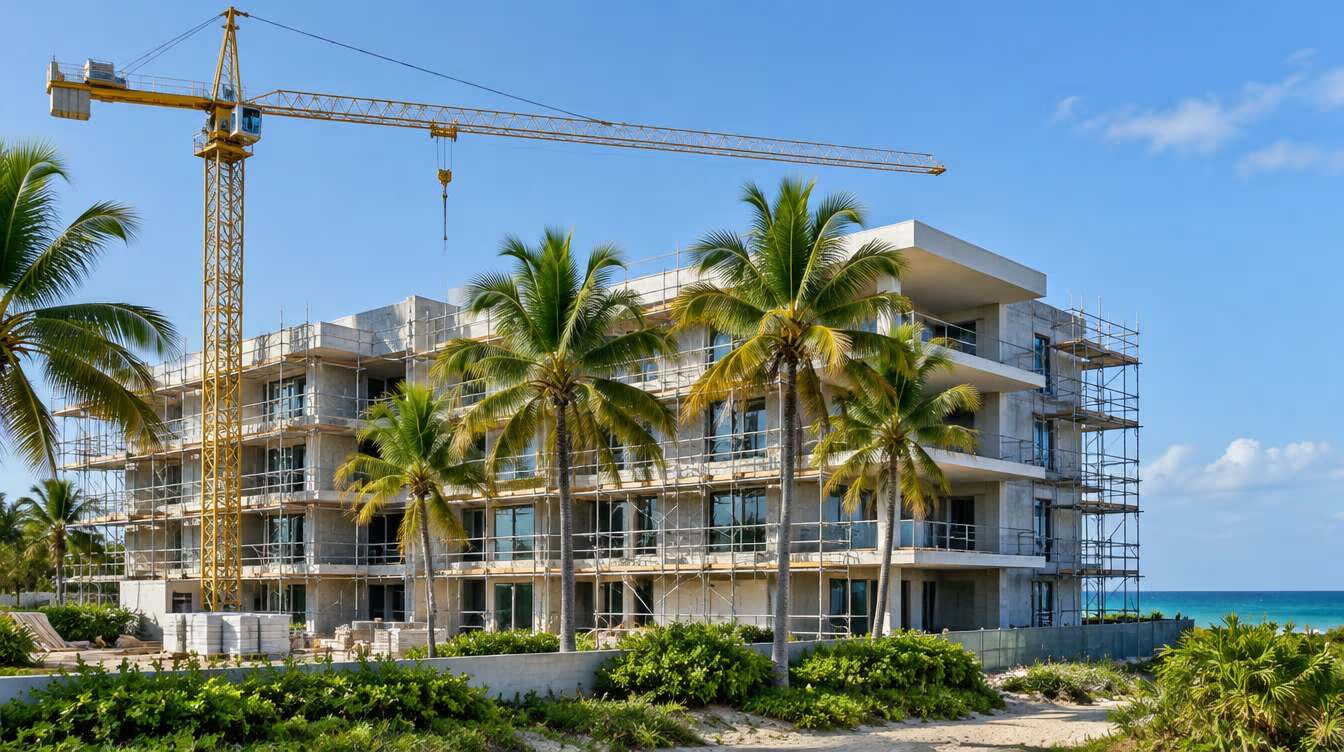
An off-plan condo gives you a wider choice of units and payments spread over the build, in exchange for waiting and trusting the developer. A ready condo can be inspected, lived in and let soon after registration, but most of the price is paid at once. The deciding question is usually when you need the keys, and what you need the unit to do once you have them.
Most buyers arrive in Thailand with a preference already formed. Some have bought off-plan at home and like the idea of a brand-new unit chosen early; others have been told that buying something unbuilt abroad is asking for trouble. Neither instinct is a plan. The better starting point is what you want the condo for, and when.
The legal and practical differences between the two routes, including what you actually own at each stage and how project status works, are set out in our guide to off-plan or ready-built property. If you have already chosen off-plan, two articles take it further: how to check the developer before you pay and how developer payment plans work. This one is about choosing between the routes. It is general information, not legal, tax or investment advice.
Start with the date you need the keys
Before the view, the pool or the price, ask yourself one question: is there a date by which the condo has to be usable? A winter you have already promised yourself, a retirement, a move with the family, a tenant you hope to have by a particular season. If there is, every month of construction is a month in which your plan depends on someone else’s timetable. Delay is the risk off-plan buyers meet most often, and the completion date shown in marketing is the developer’s plan; what binds the developer is the date in your contract, together with any grace period it allows.
If there is no date, waiting stops being a problem and becomes a tool. It gives you time to move money gradually, to visit the area in different seasons, to plan furniture and to decide on letting without pressure. A ready condo, by contrast, compresses everything: the legal review, the inspection, the transfers and the tax questions all have to be settled within a short window before registration.
Who an off-plan condo tends to suit
Off-plan works best for buyers who want a particular unit and can be patient about getting it. Early in sales most units are still available, so a high floor, a corner layout or an open view is easier to secure. Developers often revise prices as construction progresses and stock sells, but whether that happens in a given project, and by how much, nobody can promise.
It also suits buyers whose money arrives in stages: from savings, a bonus or the planned sale of another property. The developer’s schedule spreads the price over the build, though it pays to know from the start where the balance at handover will come from. And it suits people who visit Thailand regularly and can follow the site, or who are comfortable relying on progress photos and a manager’s updates.
It suits less well anyone who might need the money back before completion. Leaving early usually means assigning your contract, which depends on its terms, and there is no organised market for assignments. Buy off-plan because you want that unit, not because you plan to pass it on.
Who a ready condo tends to suit
A ready condo suits buyers who have a fixed date and want certainty about what they are getting. Wintering couples, retirees settling in and families relocating usually fall into this group; our articles on retiring to Thailand and wintering in Pattaya look at those situations in more detail.
The great advantage is that you can see what you buy. You can stand on the balcony in the late afternoon and feel how much sun it gets, hear the road at night, ride the lifts and look at the state of the pool after real use. You can talk to residents and building staff, and ask the juristic person for its recent reports and the position of the sinking fund. The price of that certainty is money and choice: most of the price is due within a short period, and you choose from what is left, either units the developer has not yet sold or units offered by private owners.
The risk you carry, and when you carry it
Neither route is risk-free; the risk simply sits in different places. With off-plan it sits with the developer and the contract for the whole construction period: late completion, changes to finishes or facilities, a neighbourhood that changes around the site and, more rarely, a project that stalls. Your currency exposure lasts just as long, because each instalment is converted into baht when you pay it.
With a ready condo, construction risk is gone, and the risk moves to the unit, the building and the paperwork. Defects need a proper inspection, the building’s management deserves a close look, and on a resale the seller’s title, any unpaid fees and room in the foreign quota must be confirmed by your lawyer before you pay a deposit. What to check on the day you take the keys, on either route, is in our guide to handover and inspection.
One rule applies on both routes. To register a condo unit as freehold in a foreigner’s name, the purchase money generally has to arrive from abroad in foreign currency, with a Thai bank’s confirmation. Off-plan, that means every instalment; ready-built, one large transfer that must be in place before registration day. Our guides to sending money to Thailand and foreign ownership explain the details, and your lawyer should confirm the route before the first payment.
Renting from day one, or renting a forecast
If you are buying to let, a ready condo removes most of the guesswork. In a building that is already let, you can see who the tenants are, how many units are on offer at the same time and whether a management company is active on site. You can usually start letting soon after registration, and sometimes buy a unit that already has a tenant, in which case read the tenancy agreement before you commit.
Off-plan, any income figure is a forecast for a building that does not yet exist, in a neighbourhood that may change before handover. That does not make it worthless, but read it as a forecast. Where we quote a rental figure, it is marked as an agency estimate, with its source and date; our rental yield guide explains how to question one.
On both routes, check before you buy whether short-term letting by the night or week is allowed: it is regulated in Thailand, and many buildings have their own rules. Ask a lawyer, read the house rules and see our guide to rental and property management. Which unit size lets best is a separate question, covered in our article on what rents best in Thailand.
A quick way to decide
A few honest answers usually do most of the work:
- Is there a date by which the condo must be ready?
- Is the money available now, or will it arrive over time?
- Do you need rental income early, or can it wait?
- Could you need the money back before completion?
- How much time can you give, from abroad, to checking a developer and following a build?
A fixed date, money in hand and a wish to let soon point to a ready condo. Money arriving in stages, a very specific unit in mind and patience point to off-plan, provided the developer has been checked carefully. To compare real options, look at ready condos in Pattaya and in Phuket, or at new developments in Pattaya and in Phuket. Where the data is in our database, a project page shows the planned completion and the stages of the developer’s payment plan, and where owners’ units in a building are published, a separate block lists resale homes in that project.
Tell a ROMA ThaiProperty manager your timetable and how you plan to use the condo. They can confirm a project’s status and planned completion with the developer, request recent site photos and the draft contract, and explain in plain English what it says. The decision is yours; our job is to make sure the right questions are asked before you make it.
Questions and answers
Is a ready or an off-plan condo better in Thailand?
There is no single answer. A ready condo suits buyers with a fixed date or who want to let soon. Off-plan suits buyers whose money arrives in stages and who can wait, after careful checks on the developer.
Is my money protected if I buy off-plan in Thailand?
Thailand has no general compulsory scheme that returns off-plan buyers’ money if a project stops. Any escrow or similar protection exists only if the contract provides for it, so have an independent Thai lawyer review it before you sign.
Can I let a ready condo straight after buying it?
Usually you can start soon after registration. Short-term letting by the night or week depends on Thai rules and the building’s own rules, so check both with a lawyer before you buy.
What happens if an off-plan project is delayed?
What you are entitled to depends mainly on the completion date in your contract, the grace period it allows and the remedies after it. Read that clause with your lawyer before the first payment.
Related property collections
- Ready Condos in Pattaya: Completed Buildings
- New Developments in Pattaya: Presale and Under Construction
- Ready Condos for Sale in Phuket
- Phuket New Developments: Off-Plan Condos and Villas
Want to talk it through with a manager? Message us on WhatsApp or leave a request.

Who will answer you
Roman Solovyev · Founder, CEO
- Speaks Russian and English
- Mon-Fri 09:00–22:00 Thailand time
We’ll send a shortlist of projects and their payment plans to your WhatsApp.