Planning a Property Viewing Trip to Thailand, Step by Step
In short
A good viewing trip is mostly planned before you fly. Narrow the list from home, get the developer's answers in writing and use video calls to rule projects out. On the ground, see fewer projects in more depth, walk the neighbourhood by day and by evening, and do not sign anything on your way to the airport.
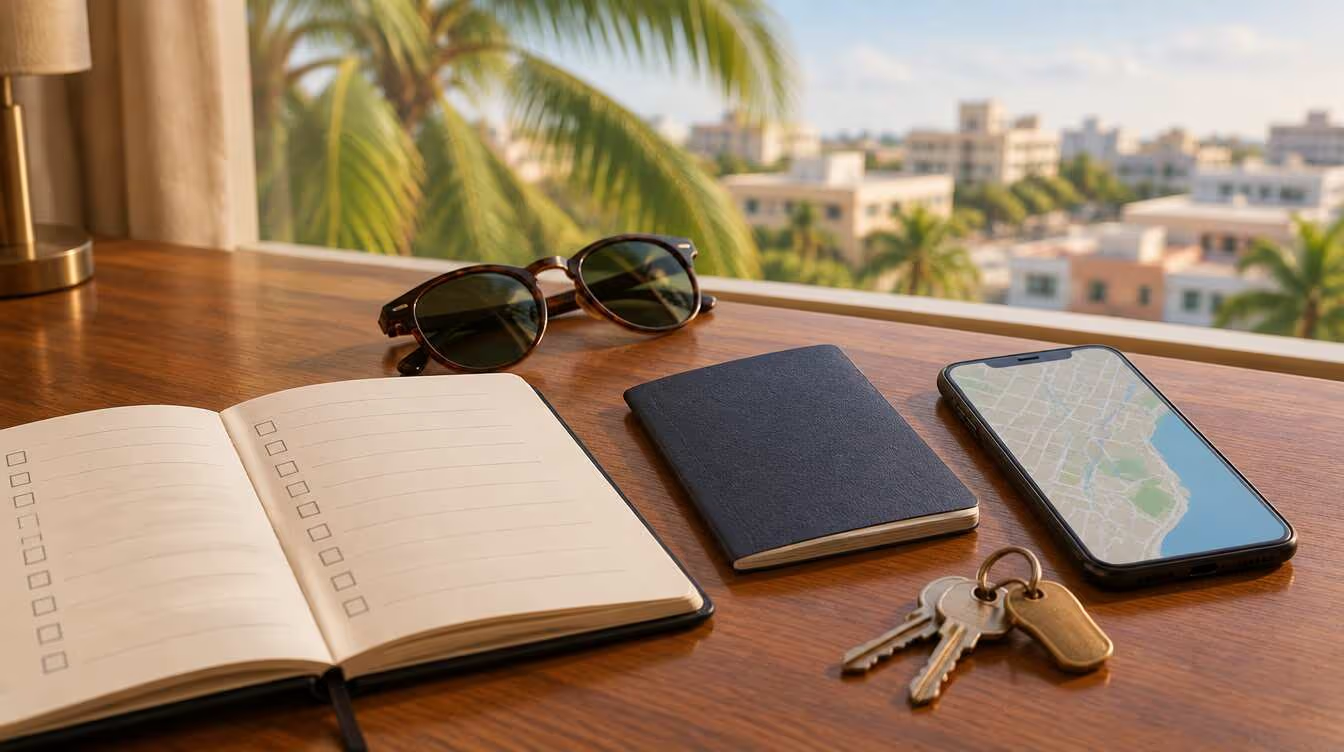
A property viewing trip to Thailand sounds like a holiday with a few appointments. In practice it works the other way round. Buyers who land without a plan spend their days in taxis between sales galleries and fly home with a bag of brochures and no decision. Buyers who prepare come back with a short list, written answers and a real feel for the street they might live on. Here is how to build that kind of trip.
If you cannot travel, you can still buy; our guide to buying property in Thailand remotely explains how. But if a visit is possible, a well-planned one settles questions that are hard to settle from a screen.
Before you fly: a shortlist, not a catalogue
The most common mistake is arriving with too long a list. Every project takes more time on the ground than it seems from home: the drive, the wait for the sales representative, the site tour, the walk around the block. So do the filtering at home. Start in our project catalogue, narrow it by city, budget, bedrooms, distance to the beach and construction stage, and keep only what matches the things you actually care about.
Before any of that, decide what the property is for: winters for the family, a rental, or a home for later life. Each goal points to a different area and sometimes a different city. If you are torn between Pattaya and Phuket, settle that before booking, because you will not pop from one to the other for an afternoon viewing. Then write down the few things that would make you say no to a project. That list does more work on the trip than any brochure.
Questions for the developer, and video calls from home
Anything that can be asked by email should be asked by email: the construction stage and planned completion, whether units remain within the foreign quota, the payment plan, the maintenance fee, and what is and is not included in the price. Written answers matter for a simple reason. On a viewing day you hear a lot and remember little, and a document you can reread is worth more than a promise made in a sales office.
Check the developer at the same time: which projects it has already delivered, whether it has a finished building in the same city, and what is known about the land. The full checklist is in our guide on how to check a property developer in Thailand. If one of its completed buildings is nearby, add it to your route. That is where you see what earlier buyers actually received, rather than what the renders promised.
A short video call with your manager or the developer before the trip filters further. If it shows that the building sits on a busy main road, or that the walk to the sea is longer than you assumed, you have saved a trip across town. What survives the calls is the list worth seeing in person.
How many viewings a day, and how to plan the route
Fewer than you think. After a few visits in a row, projects blur together: the pool from one, the kitchen from another. Seeing a handful properly beats rushing between sales galleries. Your body sets a limit too, because a day of walking streets in Thai heat and humidity is more tiring than it looks from home.
- Group viewings by area, so the day is not lost in traffic between neighbourhoods.
- Leave slack between appointments. Representatives run late, tours run long, and a good question deserves a few extra minutes.
- Plan each shortlisted project twice: a proper visit by day and a short pass in the evening.
- Keep the last day free, to go back to a favourite or catch a meeting that slipped.
- Take photos and write notes straight after each visit, in the car, before the details mix.
Season matters as well. High season shows the city full and at its best; the rainy season shows how the street copes after a downpour. Both pictures are true; just remember which one you saw.
What to check on the ground
The show unit is the least important part of the visit. It is furnished, lit and styled to sell. What matters is not in the brochure, so you check it yourself.
The site and the building
For a project under construction, ask to see the site itself, not just the sales office: what stage the work is at, whether anyone is working, and whether that matches what you were told in writing. For a completed building, look at the shared areas: lifts, parking, pool, corridors. How a standing building is maintained tells you a lot about how an unbuilt one will be run. Our article on checking an off-plan developer before you pay lists the questions to bring.
What could be built next door
Look at the plots around the building, especially anything between it and the sea. An empty plot today can be a tower later. Ask the sales representative what is planned there and pass the answer to your lawyer. A view you are paying for should rest on something firmer than a friendly reassurance.
The walk to the beach, by day and by evening
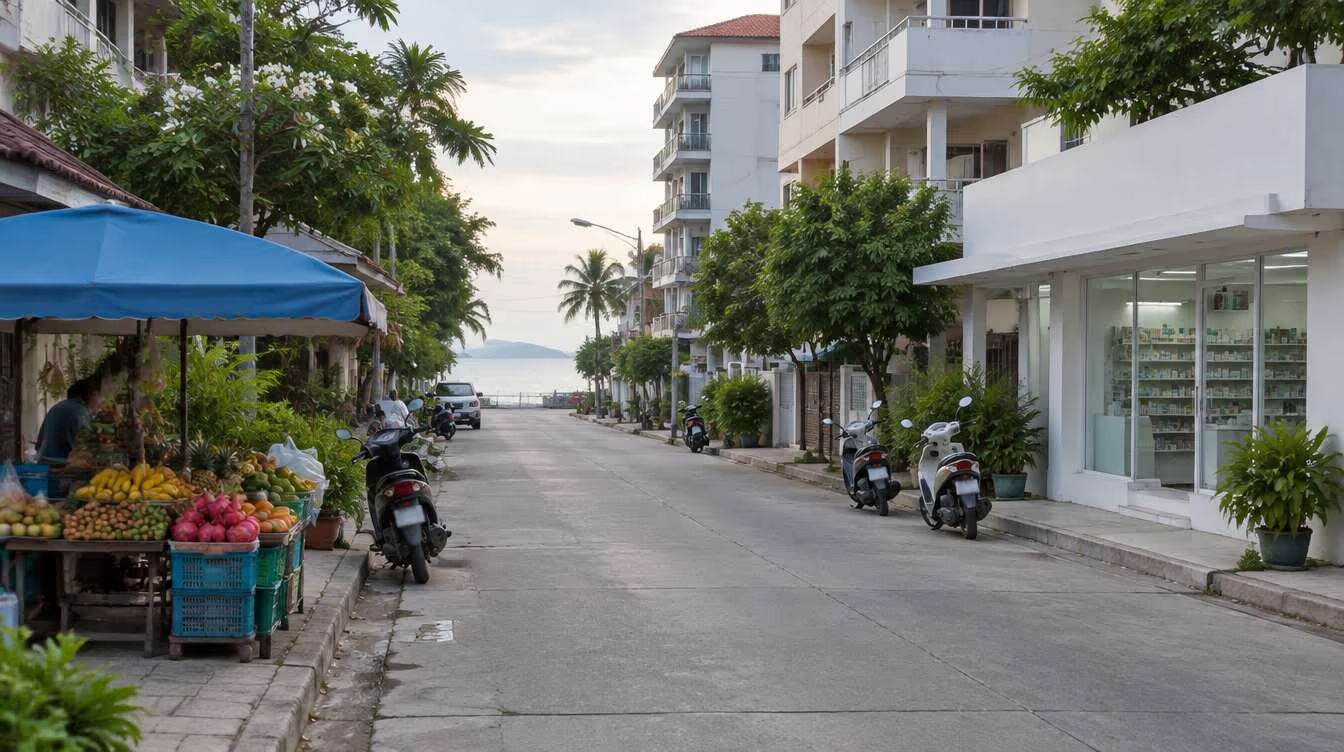
Walk from the building to the beach along the route you would take every morning. Is there a pavement? Do you have to cross a main road? Is there shade? Then do the same walk after dark. Some streets are quiet at midday and come alive at night; others become dark and empty. A listing's "minutes from the beach" and the real walk are not always the same thing.
Noise
Stand on the balcony of the unit, or one on the same side of the building, and listen: traffic, a bar, a temple, a neighbouring construction site, air-conditioning units on the building opposite. Noise does not show up in renders, and it is easy to miss on a midday visit. If you can, come back in the evening and listen again.
Do not sign in a hurry
The last day of the trip is when the pressure peaks: "this price is only valid this week", "there is one unit left on this floor", "leave a reservation deposit and decide at home". Sometimes that is true, but a decision you will live with for years should not be made between checkout and the flight. If you still want to hold a unit, first get in writing which account the payment goes to, when the deposit is refundable, and how long you have to review the contract.
Use the trip to meet the people you will work with, not only the developer's sales team: an independent Thai lawyer you choose yourself, residents or the building manager in a finished project by the same developer, and a management company if you plan to rent out. If you will later need a power of attorney, ask your lawyer whether to sign it while you are in Thailand; that is their call, not ours.
Back home, go through your notes and photos with a clear head, compare projects against the same list, and send the draft contract to your lawyer. Open questions go back to the developer, again in writing, and if something is still unclear you can ask for another video call from the site.
At ROMA ThaiProperty your manager narrows the shortlist with you, sends your questions to developers and brings back written answers, and arranges visits to sites and finished buildings. We do not replace your lawyer, and we will not push you to sign at the end of the trip.
Tell us when you plan to come, and we will build the route with you.
Questions and answers
How many properties can I view in a day in Thailand?
Fewer than most people plan for. After a few visits in a row, projects start to blur together, and the heat makes long days tiring. It is better to group viewings by area, leave time between them, and see a handful of projects properly than to rush through many.
What should I do before the trip?
Decide what the property is for, narrow the catalogue to a short list, send the developer your questions by email and check its completed projects. A short video call before the flight often rules out a project or two and saves time on the ground.
Why visit the area in the evening as well?
Because a street can change completely after dark. Some become noisy with bars and traffic; others become dark and empty. Walking the route to the beach and listening from the balcony in the evening shows what a midday visit and a render cannot.
Should I pay a reservation deposit during the trip?
Only if you are sure, and only after you have in writing which account the money goes to, when it is refundable and how long you have to review the contract. Your own lawyer should see the draft contract before you commit.
Related property collections
- New Developments in Pattaya: Presale and Under Construction
- Phuket New Developments: Off-Plan Condos and Villas
- Pattaya Condos for Sale: New Condominium Projects
- Phuket Condos for Sale: New and Completed Buildings
Want to talk it through with a manager? Message us on WhatsApp or leave a request.

Who will answer you
Roman Solovyev · Founder, CEO
- Speaks Russian and English
- Mon-Fri 09:00–22:00 Thailand time
We’ll send a shortlist of projects and their payment plans to your WhatsApp.